
The ABCs of Agent Building — Chris Overhalt, Google I/O 2026
Table of Contents
อีก session ของ Google I/O 2026 ที่อยากเก็บมาเขียน — The ABCs of Agent Building โดย Chris Overhalt, Developer Relations Engineer ที่ Google Cloud
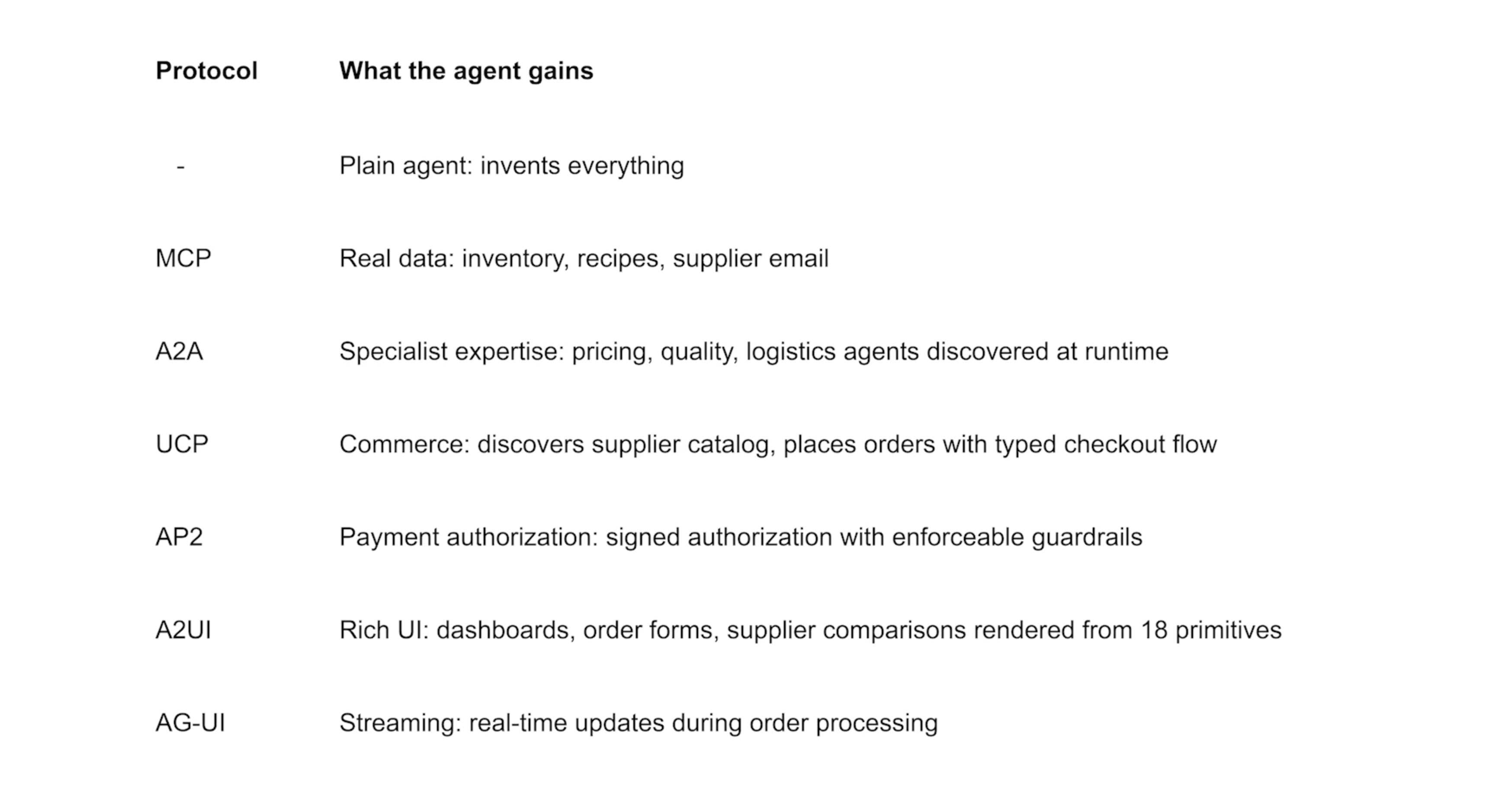
มุมที่ session นี้ใช้ practical กว่า session ส่วนใหญ่เรื่อง agent — แทนที่จะพูด framework หรือ vision Chris ลงลึกที่ protocol layer 6 ตัวที่ทำให้ agent ขึ้นจาก toy demo ไปสู่ production ได้
ก่อนเข้าเรื่อง protocol ขอวาง limitation ของ plain agent ที่ Chris ตั้งไว้ก่อน
ทำไม Plain Agent ไม่พอ
Out-of-the-box AI agent ที่รันแค่ instruction prompt และ basic tool call ติดผนังโครงสร้าง — fail ทันทีเมื่อต้อง interact กับ legacy commerce system, coordinate กับ peer agent, execute financial transaction หรือ render UI
ปัญหามาจาก — Legacy web API ถูกออกแบบสำหรับ human-in-the-loop เป็นหลัก (สมมติว่ามีคนกดปุ่ม Buy เอง อ่าน storefront ด้วยตา พิมพ์ form ด้วยมือ)
พอ baseline agent ที่ไม่มี standardized protocol ถูกสั่งให้ manage environment ซับซ้อน (เช่น check stock ครัวร้านอาหารแล้วสั่งของจาก wholesale supplier) มัน default ไป hallucinate — inventory ลอย, ราคาลอย, checkout confirmation ลอย ๆ
Chris วาง 6 protocol ที่ปิดช่องว่างนี้ทั้งหมด
Protocol 1: Model Context Protocol (MCP) — Dynamic Tool Discovery
ปัญหา: hard-code wrapper สำหรับ API แต่ละตัว และ JSON schema ของ tool ทุก service ทำให้ tool sprawl บาน model reasoning เริ่มเสื่อม
Solution ของ MCP: decouple agent ออกจาก fixed tool definition Agent connect เข้า centralized MCP server ที่ publish tool catalog ของตัวเอง runtime
ADK Implementation:
agent.register_mcp_server("wholesale://inventory-db-cluster")
agent.register_mcp_server("wholesale://recipes-and-procedures")
agent.register_mcp_server("wholesale://supplier-email-nexus")
ข้อดีคือ swap data source ได้เร็วระหว่าง prototyping โดยไม่ต้องเขียน bespoke API integration code
Protocol 2: Agent-to-Agent Protocol (A2A) — Standardized Delegation
ปัญหา (Siloed Expertise): master agent ตัวเดียวไม่มี domain knowledge ลึกพอที่จะ optimize ทุกเรื่อง (real-time seafood pricing, shipping logistics, food safety grade) expert พวกนี้อยู่ใน agent เฉพาะทางที่แต่ละทีมทำคนละ framework
Solution ของ A2A: discovery card ที่ host ที่ /.well-known/a2a — card บอกว่า agent ตัวนี้เชี่ยวชาญอะไรและรับ parameter อะไรบ้าง
ADK Implementation:
my_specialist_agent.to_a2a(endpoint="/agent-card")

response = agent.send_message(
    target_url="https://logistics-agent.corp/well-known/a2a",
    message="Can salmon order ID 9812 be routed for delivery by 17:00:00 PST?"
)
ผลลัพธ์ — agent mesh network ที่ decoupled, agent หา-เจรจา-delegate task ให้ peer ได้โดยไม่ต้องเข้าใจ framework ปลายทาง
Protocol 3: Universal Commerce Protocol (UCP) — Machine-Readable Storefront
ปัญหา: agent navigate HTML storefront แบบ consumer ได้ไม่ดี — scrape frontend, เดาตำแหน่งปุ่ม, parse layout วุ่นวาย error rate สูงตอน checkout
Solution ของ UCP: mandate path มาตรฐาน /.well-known/ucp ที่แปลง merchant entity ทั้งราย ให้เป็น machine-readable format
Implementation: strongly typed JSON endpoint สำหรับ catalog ingestion, item discovery, cart configuration, และ order placement เปลี่ยน brittle web scraping เป็น HTTP interaction ที่ predictable ตาม transaction schema
Protocol 4: Agent Payments Protocol (AP2) — Cryptographic Fiscal Guardrail
ปัญหา: ส่ง credit card number หรือ bank credential เข้า context window พร้อม natural language constraint อย่าง “do not spend more than $500” สร้าง security risk, ไม่มี audit trail, และเปิด financial exposure ใหญ่
Solution ของ AP2: hard programmatic boundary ผ่าน Typed Mandate และ cryptographic validation อัตโนมัติ:
- Checkout Mandate — registry ของ merchant endpoint ที่ pre-approved ห้ามแก้ runtime
- Payment Mandate — กำหนด spending constraint, authorized payment mechanism, และผูก transaction กับ explicit human authorization key
Implementation: ถ้า agent พยายาม route transaction ไป vendor ที่ไม่อยู่ใน list, protocol kill checkout ที่ network layer ทันที พอ compliance validate ผ่าน AP2 ออก receipt ที่ cryptographically signed เป็น audit trail
Protocol 5: Agent-to-User Interface (A2UI) — Dynamic Primitive Rendering
ปัญหา: return text block ใหญ่ ๆ user experience แย่ ในขณะเดียวกัน hard-code frontend template สำหรับทุก response pattern สร้าง frontend engineering debt มหาศาล
Solution ของ A2UI: layout registry ที่มี 18 foundational UI primitive (card, list, button, slider, text block, date picker, …)
Agent ไม่ generate HTML/JS ดิบ มัน evaluate user context แล้ว output declarative JSON schema:
{
  "surface": "modal-overlay",
  "component_tree": {
    "type": "comparison_card",
    "primitives": ["text_block", "urgency_slider", "action_button"]
  },
  "data_model": {
    "title": "Wholesale Salmon Vendor Evaluation",
    "slider_value": 90
  }
}
ข้อดี — JSON เดียวกัน render บน Lit, Angular, Flutter ได้หมดผ่าน client-side interpretative engine ของแต่ละ platform Layout กับ data แยกกันชัด
Protocol 6: Agentic Graphical User Interface (AGUI) — Asynchronous Streaming State
ปัญหา: agent chain ระยะยาว (เช่น reasoning 15,000 step) ใช้เวลานาน นั่งจ้อง spinner 45 วินาที human experience แย่
Solution ของ AGUI: standardize streaming ของ execution trace event จาก background agent เข้า client view layer
ADK Implementation: ห่อ execution model ด้วย ADK agent framework ได้ pipeline event ที่ push typed messaging packet (text_message_content, tool_call_result, run_finished) เข้า frontend canvas แบบ real-time
End-to-End Orchestration Trace
Chris demo flow ที่ทั้ง 6 protocol ทำงานในคำสั่งเดียว:
- AGUI เปิด live connection stream initialization event ขึ้น dashboard
- MCP server connection ดึง inventory metric เจอว่า stock salmon หมด
- A2A target remote pricing และ logistics agent ดึง market cost และ route constraint ปัจจุบัน
- UCP ingest supplier catalog schema สร้าง non-human checkout request file
- AP2 intercept request, check ตาม financial mandate ของเจ้าของร้าน, authorize payment, ออก signed receipt
- A2UI สร้าง side-by-side comparison matrix จาก 18 primitive render live tracking dashboard บน monitor user ทันที
End-user request เดียวเดินทางผ่าน 6 protocol แบบ transparent และ structured
Real-World Applications ที่อยากลองต่อ
Chris demo restaurant scenario แต่ pattern เดียวกัน apply กับ enterprise architecture อื่นที่มี value สูงกว่าได้ สามตัวอย่างที่เก็บกลับมาคิดต่อ
High-Net-Worth Wealth Management Agent
- MCP — hook เข้า core banking ledger, market data stream, tax compliance engine
- A2A — orchestrator query Risk Assessment Agent เพื่อ compute portfolio variance และ Tax Optimization Agent เพื่อประเมิน capital gains liability
- AP2 + UCP — UCP execute trade order ผ่าน private financial market, AP2 enforce compliance mandate (กัน transaction ที่เกิน daily liquidity limit หรือผิด localized international restriction)
- A2UI — wealth dashboard ที่ render asset allocation pie chart และ slider ปรับ risk tolerance ได้ทันที
Decentralized Smart Grid Optimization Agent
- MCP — connect time-series database ของ regional IoT power consumption, industrial battery reserve, weather telemetry
- A2A — local sub-station node agent เจรจา capacity distribution bidirectional balance grid surge
- UCP + AP2 — automate spot-market energy procurement พอ deficit ถูก predict, UCP buy capacity จาก green wholesale provider, AP2 token execute payment ภายใน micro-transaction budget
- A2UI — stream grid load map, outage isolation alert, infrastructure health metric ให้ municipal engineer
Automated Clinical Trial Enrollment Agent
- MCP — connect anonymized Electronic Health Record repository, clinical trial matching parameter, hospital inventory tracking
- A2A — coordinate Oncology Specialist Agent ที่ parse genomic data กับ Insurance Eligibility Agent ที่ confirm coverage
- UCP + AP2 — UCP discover pharmaceutical provider, AP2 cryptographic signature satisfy medical compliance และ hospital budget authorization
- A2UI — patient onboarding screen, treatment timeline calendar, dosage monitoring form สำหรับ clinical coordinator
ปิดท้าย
ที่เก็บกลับมาจาก session นี้
มุมที่ Chris เลือก present เป็น protocol mindset ไม่ใช่ framework — session ส่วนใหญ่เรื่อง agent มักจบที่ tool หรือ framework Chris ถอยขึ้นไปอีกชั้น โฟกัสที่ contract และ protocol ที่ agent ต้องใช้คุยกับ data, peer agent, commerce, payment, UI, และ user สุดท้าย
ถ้าเก็บได้สามอย่าง:
- Plain agent ที่ไม่มี protocol → hallucinate Inventory, ราคา, checkout ที่ลอย ๆ เกิดเพราะ context ไม่ถูก wire เข้ากับ system ที่ใช้งานอยู่
- Authorship → Orchestration ผ่าน protocol layer Bottleneck ของ production agent อยู่ที่การต่อ context layer ที่ structured มากกว่าการเขียน prompt
- Protocol stack เปิดทาง agent mesh A2A, UCP, AP2 ที่มาเป็น public standard ทำให้ agent ของแต่ละองค์กรคุยกันได้โดยไม่ต้องเขียน custom integration
Session นี้ practical ที่สุดของชุด Google I/O 2026 ที่ดูมา — ถ้ากำลังออกแบบ production agent stack ที่บริษัท นี่คือ session แรกที่ควรกลับไปดูซ้ำ
Original session: The ABCs of Agent Building — Chris Overhalt, Google I/O 2026