
อนาคตของอาชีพ Software Engineer: อะไรจะเปลี่ยนไปเมื่อ AI เขียน Code แทน
Table of Contents
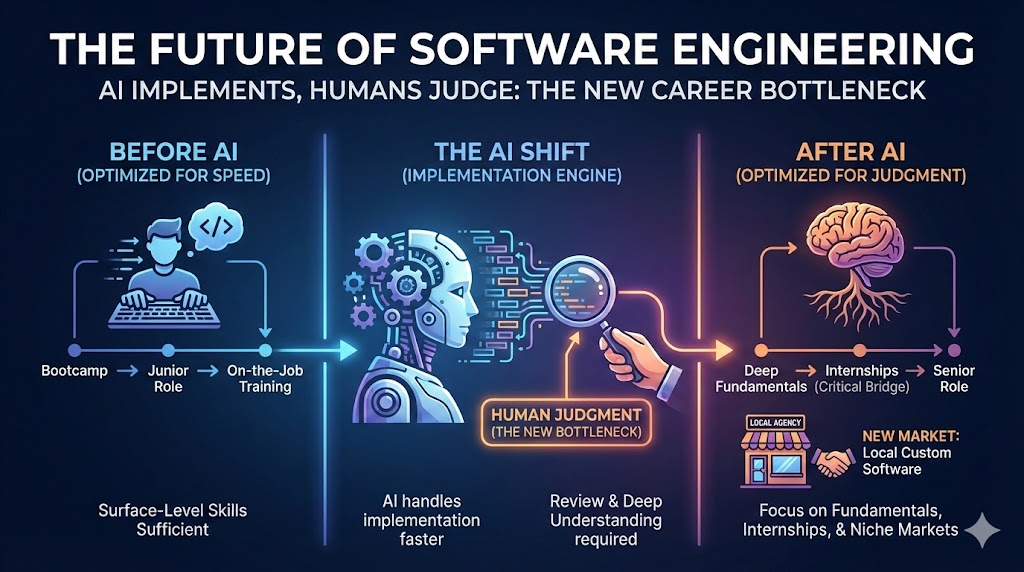
มีการถกเถียงกันใน online community เกี่ยวกับว่าจะเกิดอะไรขึ้นกับอาชีพ software engineer เมื่อ AI สามารถ implement feature ได้เร็วกว่า junior developer ส่วนใหญ่ การสนทนาเริ่มจากแนวคิดที่ว่า review กลายเป็น bottleneck ใน software development — มนุษย์ต้องตรวจสอบ output ที่ AI สร้างขึ้น — และนำไปสู่คำถามที่ใหญ่กว่า: สิ่งนี้หมายความว่าอย่างไรสำหรับคนที่เพิ่งเริ่มต้นอาชีพวันนี้?
หลังจากอ่าน arguments ต่างๆ reasoning กลับ grounded ดีอย่างน่าประหลาดใจ บทความนี้สรุป key points อธิบายว่าทำไมแต่ละ shift จึงสำคัญ และเพิ่ม practical context
Fundamentals ไม่ใช่ทางเลือกอีกต่อไป
ในช่วงทศวรรษที่ผ่านมา industry ได้ optimize เพื่อ speed to employment เรียน framework ใน 12 สัปดาห์ สร้าง portfolio ได้งาน เติม gaps ระหว่างทำงาน
Model นั้นใช้ได้เมื่อบริษัทต้องการคนเขียน code เมื่อ bottleneck คือ implementation speed การรู้แค่พอที่จะ productive ได้คือ valid strategy
Assumption นั้นกำลังพังทลาย
เมื่อ AI จัดการ implementation คุณค่าจะ shift ไปที่ judgment — ความสามารถในการประเมินว่า output ถูกต้อง efficient และเหมาะกับ context หรือไม่ และ judgment ต้องการความเข้าใจอย่างลึกซึ้งว่าสิ่งต่างๆ work อย่างไร
flowchart TD
  A[AI Generates Code] --> B{Engineer Reviews}
  B -->|Understands Fundamentals| C[Can Evaluate Correctness
Spot Edge Cases
Assess Trade-offs]
  B -->|Surface-Level Knowledge| D[Cannot Distinguish
Good Output from
Subtle Bugs]
  C --> E[Ship with Confidence]
  D --> F[Ship with Risk]
ลองพิจารณา concrete scenarios:
- Sorting algorithms — เมื่อ AI produce sorting implementation ผู้ review บอกได้ไหมว่า appropriate กับ data characteristics หรือไม่? Stable vs. unstable, time complexity กับ nearly-sorted input, memory overhead
- Caching layers — เมื่อ AI suggest cache ผู้ review เข้าใจ consistency trade-offs ไหม? Invalidation strategies, thundering herd, cold start behavior
- Distributed system design — เมื่อ AI generate system architecture ผู้ review spot failure modes ได้ไหม? Split-brain scenarios, partial failures, consistency boundaries
ทำไมสิ่งนี้สำคัญ: Algorithms, distributed systems, hardware architectures, networking fundamentals, database internals — สิ่งเหล่านี้มักถูกมองว่าเป็น “nice to have” academic knowledge แต่กำลังกลายเป็น practical foundation สำหรับการ evaluate AI-generated code Engineer ที่เข้าใจอย่างลึกซึ้งว่าสิ่งต่างๆ work อย่างไร จะ outperform คนที่รู้แค่วิธีใช้อย่างสม่ำเสมอ
Bootcamp Pipeline กำลังแคบลง
Bootcamp model ถูกสร้างบน assumption เฉพาะ: บริษัทจะจ้าง developer ที่มี experience น้อยและ invest ใน training เมื่อเวลาผ่านไป ตำแหน่ง junior developer มีมากมาย Expectation คือคุณจะเรียนรู้ missing skills ผ่านการทำงานจริงหลายปี
Pipeline นั้นกำลังแคบลง — และ signal มองเห็นได้แล้วใน hiring data และ job boards
flowchart LR
  subgraph Before["Before AI (Previous Model)"]
      A1[Bootcamp
12 weeks] --> B1[Junior Role
On-the-Job Training] --> C1[Mid-Level
2-3 years]
  end
  subgraph After["After AI (Current Reality)"]
      A2[Bootcamp
12 weeks] --> B2[Junior Roles
Shrinking]
      B2 -.->|Gap| C2[???]
  end
ทำไมสิ่งนี้เกิดขึ้น: Senior engineer ที่มี AI tools สามารถ handle งานที่เคย distribute ให้ junior developer หลายคนได้ — bug fixes, simple features, routine maintenance Economics ของการจ้างคนที่ต้อง extensive training ยากขึ้นเมื่อ alternative คือการ amplify existing senior talent
Important nuance: นี่ไม่ได้บอกว่า bootcamp graduates ไม่มี value Engineer ยอดเยี่ยมหลายคนมาจากเส้นทางนั้น Observation คือ on-ramp เอง — assumption ที่ว่าบริษัทจะ provide years of training สำหรับ entry-level hires — กำลัง shrink Path ไม่ได้ปิด แต่ bar for entry กำลังสูงขึ้น
Internships กลายเป็น Critical Bridge
ถ้าบริษัทจ้าง juniors สำหรับ training positions น้อยลง คนจะ develop judgment ที่สำคัญได้อย่างไร?
Internships — และกำลังสำคัญกว่าที่เคย
Internship คือ apprenticeship รูปแบบใหม่ เป็น environment ที่คนเรียนรู้สิ่งที่สอนใน classroom ไม่ได้:
- วิธี evaluate ว่าบางอย่างถูกต้องจริงหรือไม่
- วิธีคิดเกี่ยวกับ edge cases ที่ไม่ปรากฏใน tutorials
- วิธีเข้าใจ system behavior under stress
- วิธี make trade-offs ด้วย incomplete information
ทำไม internships build judgment ได้: Judgment มาจากการเห็นสิ่งต่างๆ break จากการ ship บางอย่างที่ดูถูกต้องแล้วค้นพบว่าทำไมมันไม่ถูก จากการทำงานร่วมกับคนที่มี judgment แล้วและ internalize mental models ของพวกเขา
Practical advice จากการสนทนา:
- Optimize สำหรับ internships ที่ บริษัทเล็ก ที่ interns work closely กับ senior engineers — มากกว่าบริษัทใหญ่ที่ interns เป็นหนึ่งในหลายร้อย
- Prioritize learning judgment over resume prestige
- หา programs ที่ interns ship to production — exposure ต่อ real-world complexity คือสิ่งที่ build instinct สำหรับการ evaluate code quality
บริษัทใหญ่บางแห่งมี exceptional internship programs ที่ interns ship real features to production แต่นั่นเป็น exception ไม่ใช่ rule Large-company internships ส่วนใหญ่เป็น structured experiences ที่ไม่ fully expose interns ต่อ complexity ของ production systems
Industry ใหม่กำลังเกิดขึ้น: Local Software Agency
นี่อาจเป็นส่วนที่น่าสนใจที่สุดของการสนทนา
หลายทศวรรษที่ผ่านมา custom software เป็นไปได้ทาง economically เฉพาะสำหรับ large organizations ธุรกิจขนาดเล็ก — ร้านอาหาร, อู่รถ, accountants, tradespeople — ใช้ off-the-shelf products และ work around limitations หรือไม่ใช้อะไรเลย
AI-assisted engineering เปลี่ยน equation นี้โดย fundamental
flowchart TD
  A[Small Business
Has Specific Need] --> B{Before AI}
  A --> C{After AI}
  B --> D[Too Expensive
Use Generic SaaS
or Nothing]
  C --> E[Local Developer
Builds Custom Solution
in Hours/Days]
  E --> F[Affordable
Tailored to Workflow
Maintainable]
Developer ที่ competent พร้อม AI tools สามารถ build custom software ในชั่วโมงที่เคยต้องใช้เวลาหลายสัปดาห์หรือเดือน สิ่งนี้เปิด entirely new market:
- ร้านอาหาร ต้องการ reservation system ที่ match กับ specific workflow ของพวกเขา — local developer สามารถ build ได้
- อู่รถ ต้องการ inventory management ที่ work ตามวิธีที่พวกเขา operate จริง — ตอนนี้ affordable to customize
- Accounting office ต้องการ client portal — ไม่ต้องใช้ enterprise-level budgets อีกต่อไป
ทำไมการเปรียบเทียบกับ early web development resonate: ในยุคแรกของ web ทุกธุรกิจต้องการ website และ local web developers build มัน Pattern เดียวกันกำลังเกิดขึ้นสำหรับ custom software applications คิดถึง WordPress และ Joomla customizations ทั้งหมดที่ธุรกิจเล็กพึ่งพา — ตอนนี้ extend ไปยัง actual custom applications, workflows และ solutions สำหรับ problems ที่ niche เกินไปสำหรับ SaaS ใดๆ
สิ่งที่ pattern นี้ favor:
- Generalists ที่ move quickly across technologies มากกว่า specialists ใน narrow stacks
- Communication skills — เข้าใจ client problems และ translate เป็น working solutions
- Judgment over raw coding speed — รู้ว่าจะ build อะไรและมัน work correctly หรือไม่
Career Decision Matrix
จากการสนทนา นี่คือ summary ว่า landscape กำลัง shift อย่างไรใน different career stages:
flowchart TD
  A[Where Are You?] --> B[Student]
  A --> C[Career Changer]
  A --> D[Working Developer]
  B --> B1[Invest deeply in
CS fundamentals]
  B --> B2[Pursue internships
aggressively]
  B --> B3[Build judgment
not just skills]
  C --> C1[Understand the bar
is rising]
  C --> C2[Build a realistic plan
not depending on
junior roles]
  C --> C3[Focus on fundamentals
+ practical experience]
  D --> D1[Enormous opportunity
in custom software]
  D --> D2[Position for markets
that could not
afford software before]
  D --> D3[Leverage AI tools
to multiply output]
Takeaway
Core argument ตรงไปตรงมา: human in the loop จะไม่หายไป เมื่อ AI tools มี power มากขึ้น human กลับ important มากขึ้น — แต่ nature ของงาน shift จากการเขียน code เป็นการ evaluate มัน
สิ่งที่เปลี่ยนคือ which humans, doing what work, for whom
- Engineer ที่เข้าใจ fundamentals deeply สามารถ evaluate AI output ด้วย confidence
- Developer ที่ communicate กับ non-technical clients และ deliver tailored solutions ได้ unlock entirely new market
- Student ที่ build judgment ผ่าน real-world internships เข้าสู่ workforce ด้วย skill ที่ matters most
อนาคตเป็นของคนที่ judge ได้ว่าบางอย่าง correct หรือไม่ — ไม่ใช่แค่ว่ามัน compiles
บทความนี้สรุปและ restructure จากบทความที่มีการพูดถึงกันอย่างกว้างขวางเกี่ยวกับอนาคตของอาชีพ software engineer ในยุค AI การสนทนาเดิม explore ว่า AI implementation speed shift value ไปสู่ human judgment อย่างไร และหมายความว่าอย่างไรสำหรับ education, hiring และ new market opportunities Landscape กำลัง evolve rapidly — observations เหล่านี้ reflect current moment